

Daily oral care is important for everyone. A healthy mouth can help people avoid pain from infections and tooth loss, which can impact a person’s nutrition, speech, and overall health.
Dental care is a critical healthcare need for people with physical or intellectual disabilities. People with disabilities are more prone to dental issues if daily hygiene is not maintained. These individuals often face challenges with self-care tasks, such as caring for their oral hygiene.
For some people with disabilities, it can be difficult to hold a manual toothbrush or dental floss with their hands. Some individuals may require custom or modified dental aids to help them achieve and maintain better oral health.
Dental Care Aids to Support Your Daily Oral Hygiene
If you have a disability, maintaining a healthy mouth may involve less effort with a toothbrush that is easy to grip and flossing aids that are simple to use. They can help remove food particles and plaque buildup from the surface and between your teeth, as well as along the gumline. Here are some dental care aids that may help you with your dental care routine, provided by the National Institute of Dental and Craniofacial Research.
Helpful Tips for Better Toothbrush Grip
Gripping a toothbrush may be a challenge with limited hand use. The good news is that there are simple ways to grasp a toothbrush, making it more comfortable to hold. Let’s explore some of the options listed below.
- Add a wider handle to your toothbrush. Wrap the handle with a washcloth and secure it
 with a rubber band. Attach a tennis ball, bicycle handle, or foam tubing to help grip the toothbrush more easily.
 - Wrap a Velcro strap or holder around your toothbrush. This can help keep your toothbrush in your hand, so you do not have to grip it tightly. View a short video on tips for better toothbrush grip.
- Try a power toothbrush. Power toothbrushes have a wider handle than a manual toothbrush. This can make it easier to hold. A powered toothbrush does the cleaning for you. All you need to do is move it from tooth to tooth.
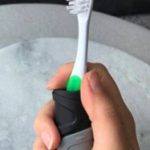 with a rubber band. Attach a tennis ball, bicycle handle, or foam tubing to help grip the toothbrush more easily.
Flossing Aids to Clean Between Your Teeth
Daily plaque removal between teeth and just below the gumline is important to prevent gum disease and tooth decay. Gum disease can also lead to other health issues, which can affect your overall health. Here are some helpful options for people who have difficulty holding standard string floss.
- Flossing picks. Flossing picks can help when you are unable to wrap dental floss around your fingers.
- Floss holder. This option holds the floss string securely in place. It makes it easier to reach and clean between your teeth without having to place your fingers in your mouth. View a short video on how to use a floss holder.
- Oral irrigator. These are also known as water flossers. These devices spray water between teeth to clean them.
 your fingers.
How to Make Your Dental Care Routine Easier
People who brush their teeth and floss daily usually have fewer dental problems. It can be a challenge to care for your oral health when body movements are limited. Try some of the ideas listed here to help you adjust your dental care routine for a healthier mouth.
If you have trouble with:
- Gagging or choking when brushing? Use less toothpaste. You only need a pea-sized amount to brush your teeth. Keep your head in a neutral or downward position while brushing.
- Opening a toothpaste tube? Try a toothpaste tube with a flip top. You can also try a toothpaste in a pump dispenser.
- Putting toothpaste on your toothbrush? Place the opened tube of toothpaste on the sink counter slightly over the basin. Hold your toothbrush under the tube. Use your fingers or the side of your hand to squeeze out the toothpaste. You can also squeeze toothpaste onto your tongue and then transfer it to your toothbrush.
- Standing in front of the sink while brushing your teeth? Sit on the toilet and spit into the sink or a cup. Consider brushing in a place outside the bathroom, such as at a table with a towel, a bowl, and a cup of water. If you are in bed or a wheelchair, keep a cup and a towel on your lap or nearby.
 toothpaste in a pump dispenser.
Tips to Keep Your Mouth Healthy
Good oral hygiene stops plaque and bacteria from causing cavities, gum disease, and tooth loss. The oral care tips listed below can help you maintain great oral health.
- Always brush your teeth before bed and use a fluoride toothpaste.
- Don’t rinse your mouth right after brushing. This allows the fluoride in the toothpaste to coat your teeth, protecting them from cavities.
- See your dentist twice a year. Dental exams can help identify and treat dental issues in their early stages. A professional cleaning ensures plaque and tartar are thoroughly removed.

How to Have a Better Experience at the Dental Office
Before your dental appointment, let the office know about your disabilities, mobility considerations, communication needs, or sensitivities. This will allow the dental team to prepare accommodations and create a more comfortable experience for you.
Your dentist or dental hygienist may recommend:
- Fluoride varnish for extra cavity protection.
- Dental sealants on the chewing surfaces of the back molars.
- Remedies to reduce dry mouth, which can increase the risk of tooth decay, especially if you take certain medications.
Good oral health is essential. Try the options listed above to help you with your daily dental care. It may take some time to adapt to them. Ask your dentist for resources to help you with your dental care. Consider seeking support from family members or others who can assist you in maintaining your oral health.
Sources
https://adata.org/factsheet/ADANN-writing (2025, December)
https://www.oralhealthkansas.org/AdultsDisabilities.html (2025)
https://www.youtube.com/watch?v=DshRE_0iooE&t=6s (2025, October 6)

